
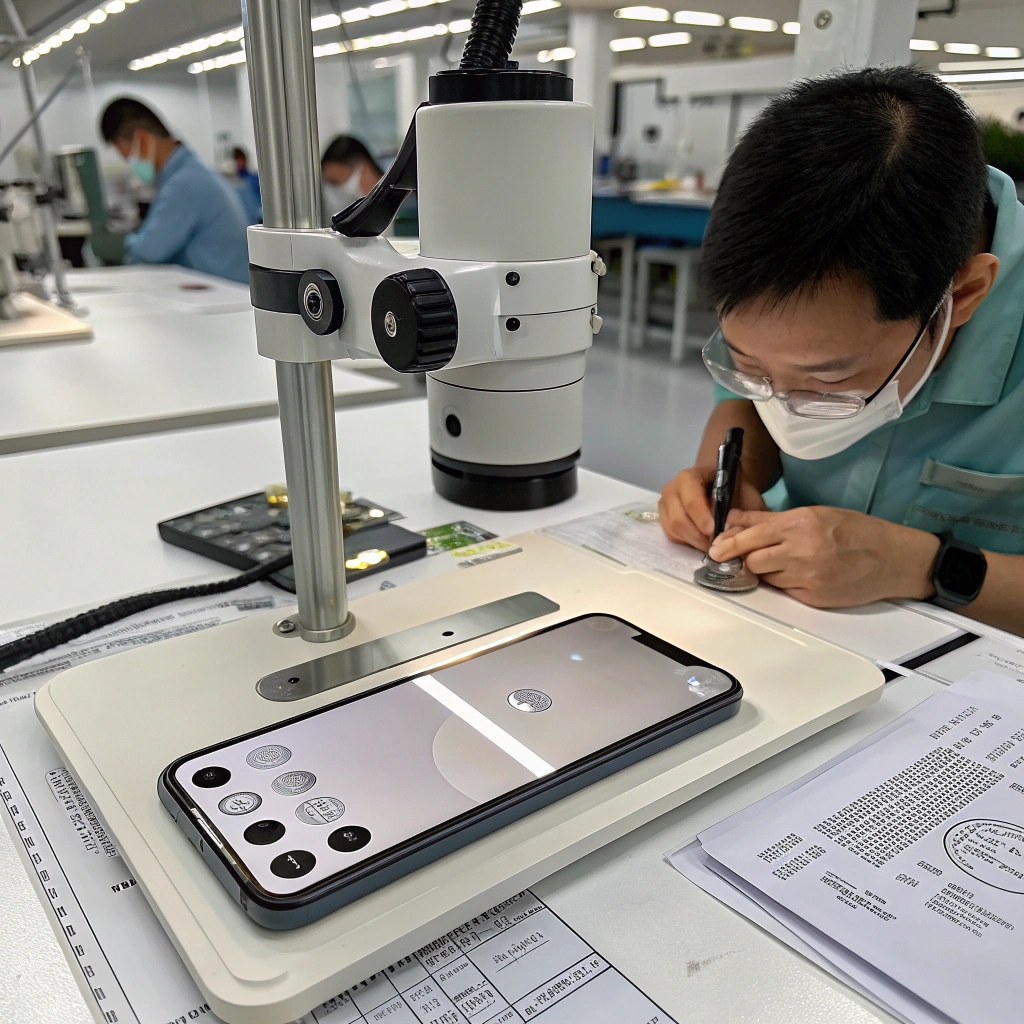
Are you struggling with inconsistent quality results because your team lacks clear visual inspection standards? You’re not alone in this challenge.
Visual inspection standards are clearly defined guidelines and acceptance criteria that ensure consistency, objectivity, and accuracy in inspection results. These standards eliminate subjective judgment variations and create uniform quality control across your production line.
After 30+ years in the visual inspection equipment industry, I’ve seen countless manufacturers transform their quality control by implementing proper standards. Let me share what really works.
What is an Example of a Visual Inspection?
Have you ever wondered how your smartphone achieves that flawless exterior finish? The answer lies in rigorous visual inspection processes.
A common visual inspection example is smartphone case inspection, where technicians examine metal or glass surfaces for scratches, dents, stains, color variations, and burrs under standardized lighting conditions using reference samples for comparison.
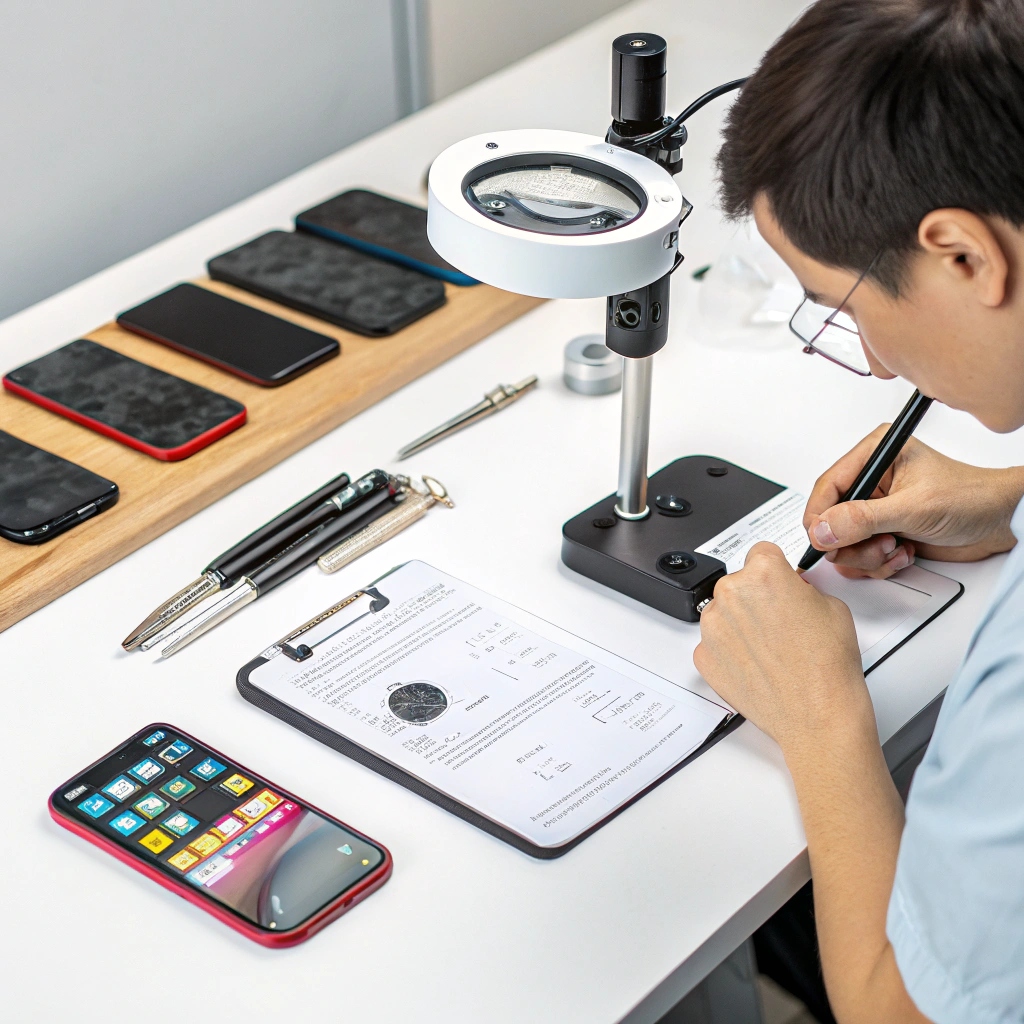
Let me walk you through a real smartphone case inspection I witnessed at a major manufacturer. The inspection object was a premium aluminum phone case destined for a flagship device. The company provided defect limit samples and detailed inspection guidelines that served as our inspection standards.
The inspection covered five critical defect categories1. First, scratches were measured for length and width against predetermined limits. Second, dents required checking diameter, depth, and quantity within acceptable ranges2. Third, contamination involved identifying visible spots, fingerprints, or dust particles. Fourth, color differences were compared against standard color references. Finally, burrs at edges or openings were examined for protruding imperfections.
The inspection method involved examining the case under standardized lighting from multiple angles. Inspectors used tactile examination along edges to detect burrs, then compared findings against limit samples to make pass-fail decisions. This systematic approach caught defects that would have reached consumers otherwise.
| Defect Type | Measurement Criteria | Acceptance Limit | Inspection Method |
|---|---|---|---|
| Scratches | Length × Width | <2mm × 0.1mm | Visual + Magnification |
| Dents | Diameter × Depth | <1mm × 0.05mm | Visual + Tactile |
| Contamination | Visible spots | Zero tolerance | Visual under light |
| Color variation | Delta E value | <1.5 units | Colorimeter comparison |
| Burrs | Edge smoothness | No sharp edges | Tactile examination |
What are the Steps in Visual Inspection?
Do you follow a systematic approach, or do your inspectors wing it each time? Consistency comes from following proven steps.
Visual inspection follows four main phases: preparation (standard clarification, environment setup, equipment readiness, sample preparation), execution (systematic scanning, focused checking, comparative judgment), decision-making, and documentation with feedback loops.

The preparation phase sets your inspection foundation. You must clarify inspection standards3 by reviewing technical drawings, customer specifications, and internal procedures. Environment preparation involves setting up proper lighting, temperature, and workspace cleanliness. Equipment preparation includes calibrating measuring tools, preparing magnification devices, and arranging reference samples. Sample preparation ensures your inspection items are clean and properly positioned.
During execution, systematic scanning covers the entire inspection area following a predetermined pattern. This prevents missing critical areas. Focused checking concentrates on known problem areas or customer-specified critical points. Comparative judgment involves comparing findings against established standards and reference samples.
The decision-making phase4 requires clear pass-fail criteria application. You document all findings, mark problematic areas, and make disposition decisions based on established acceptance levels. Finally, documentation and feedback involve recording inspection results clearly, segregating non-conforming items, and providing feedback to production teams for continuous improvement5.
| Phase | Key Activities | Duration | Critical Success Factors |
|---|---|---|---|
| Preparation | Setup, calibration, review | 5-10 minutes | Proper lighting, clean samples |
| Execution | Scan, check, compare | 15-30 minutes | Systematic approach, focus |
| Decision | Evaluate, judge, mark | 2-5 minutes | Clear criteria, objectivity |
| Documentation | Record, segregate, feedback | 3-7 minutes | Accurate records, communication |
How to Conduct a Visual Inspection?
Are your inspection results reproducible across different inspectors and shifts? Effective visual inspection requires specific methods and best practices.
Effective visual inspection requires proper lighting setup, maintaining appropriate distance and angles, following fixed patterns, using appropriate tools like magnifiers and measuring instruments, comparing against reference samples, taking regular breaks, and maintaining detailed records.
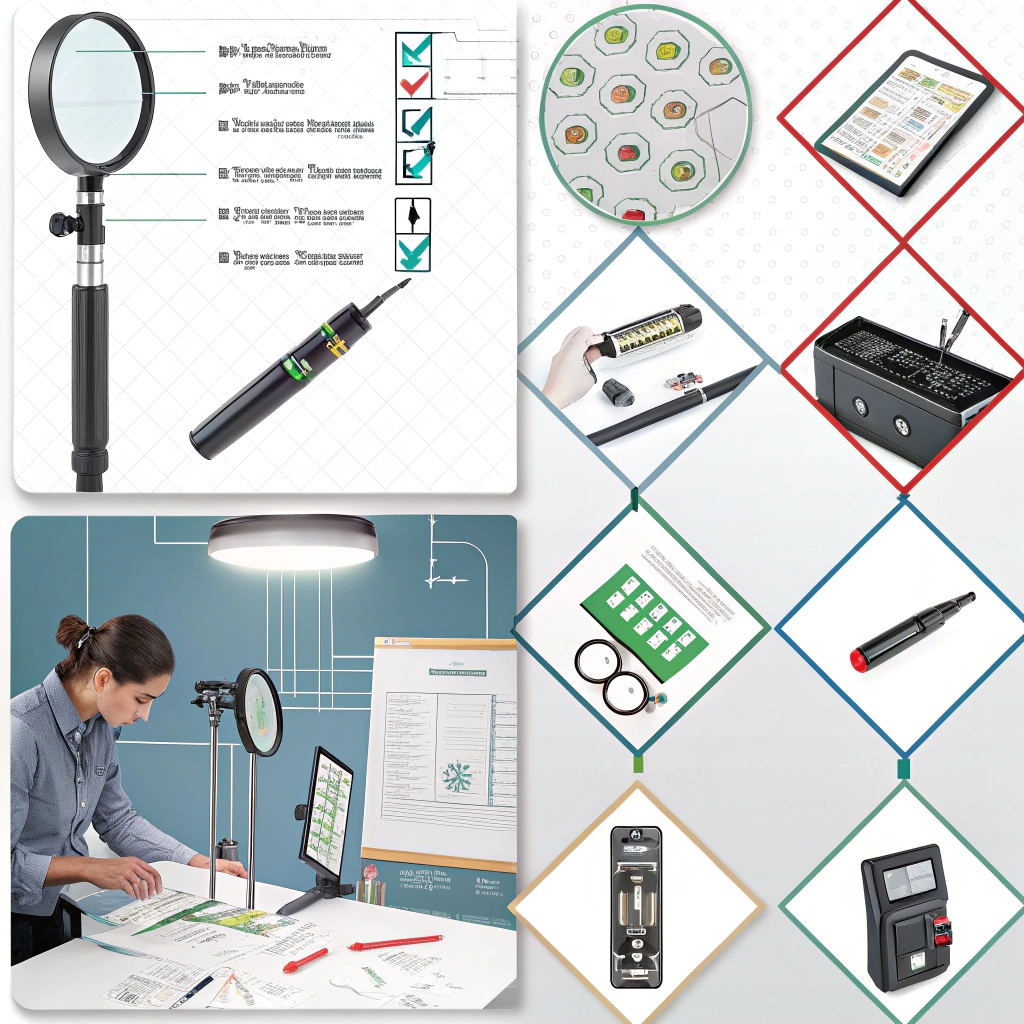
Lighting plays the most critical role in visual inspection success. I recommend using daylight-equivalent LED lighting at 1000-1500 lux intensity. Position lights to minimize shadows and reflections. Use multiple light sources from different angles for complex geometries. Avoid fluorescent lighting that can mask certain defects.
Distance and angle management ensures thorough coverage. Maintain 12-18 inches between your eyes and the inspection surface. View items from multiple angles, rotating pieces systematically. Use 30, 45, and 90-degree viewing angles to catch different types of surface defects. This approach reveals defects invisible from single viewing positions.
Following fixed inspection patterns prevents missed areas. Start from one corner or edge and work systematically across the entire surface. Use a grid pattern for large flat surfaces or a spiral pattern for circular items. Train all inspectors to use identical patterns for consistency.
Tool utilization enhances detection capability. Use 2-4x magnification for general inspection and 10x for detailed examination. Employ calipers and rulers for dimensional verification. Use color-matching tools for appearance-critical products. Keep tools calibrated and clean for accurate results.
Reference sample comparison provides objective judgment standards. Maintain current limit samples showing borderline acceptable and unacceptable conditions. Train inspectors to use these samples consistently. Update samples when standards change or samples deteriorate.
Regular breaks prevent inspector fatigue that compromises judgment. Schedule 5-10 minute breaks every 20-30 minutes. Encourage eye exercises and distant focusing during breaks. Monitor inspector performance throughout shifts to identify fatigue patterns.
What are the Three Elements of Inspection?
Have you considered why some inspection systems succeed while others fail consistently? Success depends on three fundamental elements working together.
The three core inspection elements are standards (inspection basis), methods (inspection means), and skills (inspection executor). These elements are interdependent – standards provide targets, methods provide pathways, and personnel provide execution capability for effective quality control.

Standards serve as your inspection foundation and decision-making basis. These include international standards like ISO and ASTM, industry-specific standards such as automotive IATF 16949, customer specifications from technical drawings and requirements, and internal company standards including SOPs and reference samples. Without clear standards, inspectors make subjective decisions leading to inconsistent results.
Methods encompass your inspection techniques and procedures. This includes systematic examination patterns, appropriate lighting and environmental conditions, proper tool selection and usage, statistical sampling approaches, and documentation procedures. Methods translate standards into actionable steps that inspectors can follow consistently.
Skills represent your human element – the inspector’s capability and competence. This involves technical knowledge of products and processes, visual acuity and attention to detail, experience with inspection techniques, understanding of quality concepts, and judgment capability for borderline cases. Even perfect standards and methods fail without skilled execution.
The interdependent relationship creates inspection system strength6. Standards without proper methods remain theoretical. Methods without skilled personnel produce unreliable results. Skills without clear standards lead to inconsistent interpretation. When all three elements align properly, you achieve reliable, repeatable inspection results7 that support your quality objectives.
| Element | Components | Impact on Quality | Development Method |
|---|---|---|---|
| Standards | ISO, customer specs, internal SOPs | Provides consistency baseline | Regular review and updates |
| Methods | Procedures, tools, environment | Enables reliable execution | Training and standardization |
| Skills | Knowledge, experience, judgment | Determines result quality | Continuous training programs |
Conclusion
Visual inspection standards create the foundation for consistent quality control through clear guidelines, systematic methods, and skilled execution working together.
-
Understanding critical defect categories is essential for maintaining quality standards in manufacturing and inspection processes. ↩
-
Exploring acceptable ranges helps ensure that products meet quality standards and reduces the risk of defects. ↩
-
Understanding inspection standards is crucial for ensuring quality and compliance in any inspection process. ↩
-
Understanding the decision-making phase can enhance your project management skills and improve outcomes. ↩
-
Exploring continuous improvement practices can help you implement effective strategies for organizational growth. ↩
-
Understanding inspection system strength is crucial for achieving reliable quality control results in any organization. ↩
-
Exploring methods for reliable inspection results can enhance your quality management processes and ensure consistency. ↩
Written by

You may also be interested in:

How Does a Sorting Machine Work?
Do you struggle with slow pack

What is a visual inspection system?
Manufacturing quality control

What is a visual inspection machine?
You face quality control chall